Traditions
What is cupping therapy? The marks, claims and evidence
Round purple marks made cupping famous. NCCIH says it may help reduce pain, on weak evidence, and lists its side effects. At W Spa, cupping therapy is a short add-on to a massage.
The short answer
Cupping therapy uses suction inside a cup to pull skin and blood toward the surface, which leaves round marks. Dry cupping keeps skin intact; wet cupping pierces it. NCCIH says it may help reduce pain, but the evidence is weak. At W Spa cupping is a 10 minute add-on to a booked massage, such as a 60 minute Swedish.
- dry cupping keeps skin intact; wet cupping pierces it
- 2 forms
- cups come in glass, ceramic, bamboo or plastic
- 4 materials
- discoloration, scars, burns, infections, eczema or psoriasis flares
- 5 side effects
- 10 minutes of cupping alongside a massage in Palo Alto
- $20 add-on
What is cupping therapy and how does the suction work?
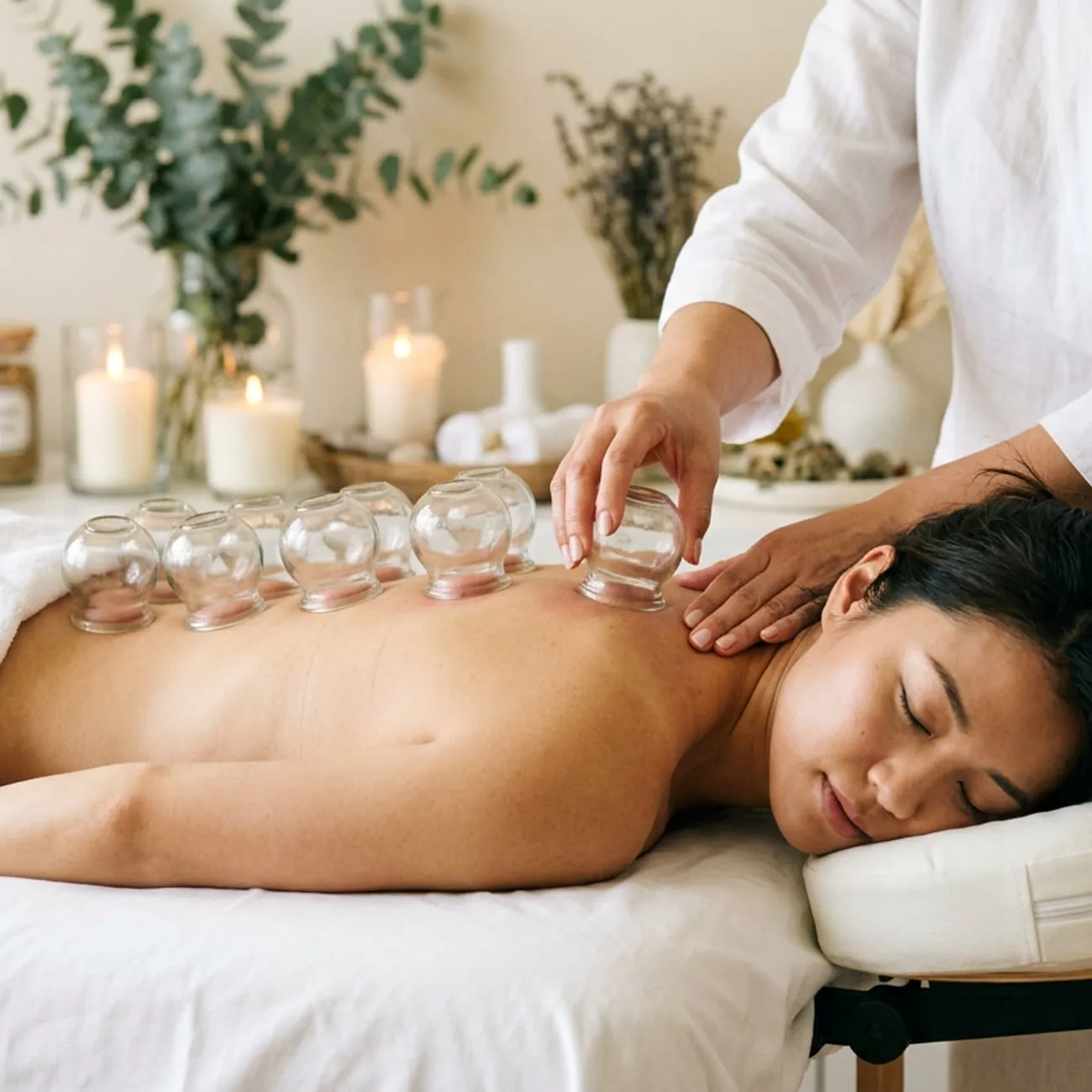
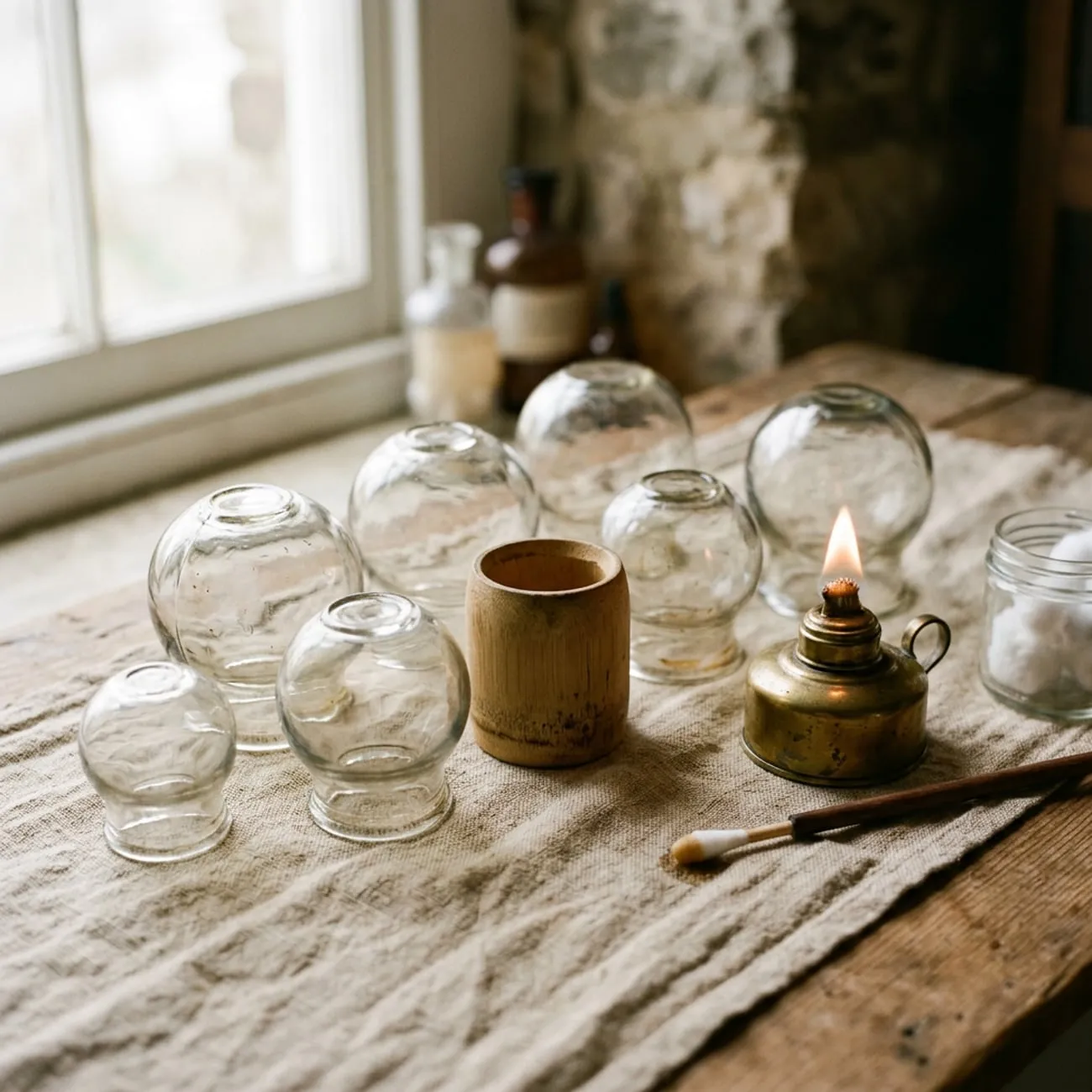
Cupping is suction applied to the skin with a cup. NCCIH describes it as a practice used in traditional medicine in several parts of the world, including China and the Middle East. A practitioner places a glass, ceramic, bamboo or plastic cup on your skin and creates suction inside it in one of two ways. The older method uses a flame to burn off the oxygen, then presses the cup to the skin. As the trapped air cools it contracts, and the drop in pressure pulls skin and surface tissue up into the cup. The newer method skips the fire and attaches a pump to the cup once it is in place.
Suction is what separates cupping from the rest of a spa menu. A massage therapist pushes down into tissue; cupping pulls tissue up and out, and that pull draws blood toward the surface. The pooled blood under your skin is what you are looking at when you see the marks.
How long does a cupping add-on take?
It takes 10 minutes at W Spa, where cupping is an add-on attached to a booked massage and not a session of its own.
What does cupping feel like?
A steady upward tug, strongest in the first minute and duller after that. It tends to feel strange rather than painful, closer to a vacuum than to pressure. If a cup draws hard enough to sting, say so while it is happening — a practitioner can release the seal and reseat the cup somewhere with more give.
What is the difference between dry and wet cupping?
Dry cupping leaves the skin intact and marks it like a bruise; wet cupping pierces the skin so blood flows into the cup, which adds the risks of an open wound and bloodborne infection. If a practitioner cannot tell you plainly which one they do, settle that before anything touches your back.
The circles themselves have nothing to do with impact, and nothing to do with toxins being pulled to the surface, whatever the marketing says. Suction ruptures tiny blood vessels under the skin, and blood leaks into the tissue around them. What you see afterwards is a flat round patch tracing the rim of the cup, red to purple and sometimes nearly black.
The marks fade. NCCIH adds a practical point: tell your health care providers where they came from, so the round patches are not mistaken for signs of physical abuse. A clinician who sees symmetrical circular marks on someone's back with no context has reason to ask hard questions.
Does cupping therapy work?
Possibly for pain, but weakly. NCCIH's bottom line is that cupping may help reduce pain, but the evidence for this isn't very strong: most cupping research is of low quality, and there is not enough good research to judge it for other conditions.
On acupuncture, a far more heavily studied practice than cupping, the picture runs genuinely both ways. Some trials find real acupuncture and sham acupuncture equally effective, which points to a placebo effect. Other studies suggest real acupuncture may help with often-chronic pain: low-back pain, neck pain, osteoarthritis and knee pain, and carpal tunnel syndrome. It may also reduce tension headaches and help prevent migraines.
Studies point to two effects: acupuncture stimulates the release of the body's natural painkillers, and it affects brain areas involved in processing pain. Cupping's pull-the-blood-to-the-surface story has no comparable mechanism findings in the agency's fact sheet.
Whatever relief a session brings may owe a good deal to expectation, attention, and the plain comfort of lying still while someone tends to your back. That is a real effect for the person feeling it, and as a short add-on to a massage it costs little to try.
NCCIH says cupping may help reduce pain, but the evidence for this isn't very strong.
What are the documented risks of cupping therapy?
Five documented side effects, plus two rare severe ones. NCCIH lists persistent skin discoloration, scars, burns and infections, and notes that cupping can make eczema or psoriasis worse. Burns trace straight back to the fire method, since an open flame near skin to create suction carries an obvious hazard.
The rare severe cases NCCIH flags are bleeding inside the skull, reported after cupping on the scalp, and anemia from blood loss, reported after repeated wet cupping.
Cupping equipment can pick up blood, intentionally in wet cupping and inadvertently in dry. Reusing it without sterilizing it between clients can spread bloodborne diseases such as hepatitis B and C.
Reused without sterilizing, cupping gear can spread hepatitis B and C, after dry cupping as well as wet.
Who should skip cupping?
Skip cupping therapy if you bruise or bleed easily, take a blood thinner, or have eczema or psoriasis over the area being worked, and ask your own clinician first if you are pregnant.
How long do the marks last?
Usually a few days, fading the way a bruise does, from purple through green to yellow. They sit where the rim of each cup sealed, which makes them round and evenly spaced rather than blotchy. Plan around them if you have a wedding, a photo shoot or a swim meet in the coming week.
Does “thousands of years old” mean cupping works?
No, and the tradition's own record is the clearest argument against it. Cupping is usually presented inside traditional Chinese medicine. NCCIH describes that as a system evolved over thousands of years, using psychological and physical approaches such as acupuncture and tai chi alongside herbal products. Line up four practices from that one tradition and they have fared very differently under modern testing.
| TCM practice | What NCCIH reports |
|---|---|
| Tai chi | May improve balance and stability in older people and those with Parkinson's disease, reduce knee-osteoarthritis pain, and help people cope with fibromyalgia and back pain. |
| Acupuncture | Two-sided: may help chronic pain (low-back, neck, osteoarthritis/knee, carpal tunnel) and headaches — but some trials find sham acupuncture works equally well. |
| Chinese herbal products | Studied for stroke, heart disease, mental disorders and respiratory illness, but studies are of poor quality — no firm conclusions. |
| Cupping | May help reduce pain, but the evidence is not very strong; too little good research to judge other conditions. |
How should you decide whether to book cupping?
Treat it as low-evidence comfort care rather than a medical treatment. At W Spa cupping is a 10 minute add-on at $20, placed along the back during a massage. A 60 minute Swedish massage is $80, or $100 with cupping; a 60 minute deep tissue massage is $90, or $110 with cupping.
Questions before you book? Call W Spa at (650) 272-6881. The spa is at 441 Waverley Street, Palo Alto, CA 94301, open every day from 9:30 AM to 10 PM.
One boundary NCCIH attaches to traditional Chinese medicine broadly applies here in full: do not let cupping replace or delay conventional care for a real condition.
- Ask which method is used. Wet cupping breaks the skin and carries the heavier risks: bloodborne infection, scarring, and, with repetition, blood loss.
- Then ask about the equipment. Single-use, or sterilized between clients? On dry cupping as much as wet, that answer is the one protecting you.
- Check your skin next. Eczema or psoriasis over the area can flare, so point it out before the cups come anywhere near it.
- Keep the cups off the scalp. Bleeding inside the skull after cupping on the scalp is rare, and it is on the record.
Questions people ask
What is cupping therapy?
Cupping places a glass, ceramic, bamboo or plastic cup on the skin and creates suction inside it — either by briefly heating the cup with a flame or by attaching a pump. The negative pressure pulls skin and surface tissue upward and draws blood toward the surface. NCCIH describes it as a practice used in traditional medicine in several parts of the world, including China and the Middle East.
Why does cupping leave round marks?
Suction ruptures tiny blood vessels just under the skin and blood leaks into the surrounding tissue, much as in a bruise. The marks fade over a few days. NCCIH advises explaining them to your health care providers so the circles are not mistaken for signs of physical abuse.
Does cupping actually work?
Possibly for pain, but the evidence is weak. NCCIH says cupping may help reduce pain, but the evidence for this isn't very strong. Most research on cupping is of low quality, and there is not enough good research to reach conclusions about other conditions.
What is the difference between dry and wet cupping?
Dry cupping keeps the skin intact and leaves a bruise-like mark. In wet cupping the practitioner pierces the skin and blood flows into the cup — an open-skin procedure with heavier risks: bloodborne infection, scarring and, over repeated sessions, anemia from blood loss. Ask which one a practitioner does before you book.
Is cupping safe?
It carries documented risks: persistent skin discoloration, scars, burns, infections, and flares of eczema or psoriasis. Rare but serious events include bleeding inside the skull after scalp cupping and anemia after repeated wet cupping. The key protection is equipment that is single-use or sterilized between clients, since contaminated gear can spread hepatitis B and C.
How much does cupping cost at W Spa in Palo Alto?
Cupping is a 10 minute add-on at $20, attached to a booked massage rather than sold on its own. A 60 minute Swedish massage is $80, so a 60 minute Swedish massage with cupping comes to $100. The other add-ons are hot stone at $20 and a body scrub at $30. Book on Fresha or call (650) 272-6881.
Sources
Published by W Spa, 441 Waverley Street, Palo Alto. Outside figures on this guide come from the sources listed above. Prices and hours are taken from our Fresha booking page.
This guide is for general information only and is not medical advice. Talk with your healthcare provider about what is right for you.
Last reviewed . Published .
Curious what cupping feels like?
Add 10 minutes of cupping to a massage in Palo Alto
At W Spa the cups go along the back during a massage you have booked. Tell your therapist at the start if it is your first time, or if you would rather not have the marks.
W Spa · 441 Waverley St, Palo Alto, CA 94301 · (650) 272-6881 · Open daily · 9:30 AM – 10 PM
Keep reading
Does massage help back pain?
What the reviews found, and the ACP guideline that lists massage for recent low-back pain but not for chronic pain.
Read
The add-ons menu
Hot stone, cupping and a body scrub, each a 10 minute extra on a booked massage.
Read
Deep tissue massage in Palo Alto
Slow, firm work on the deeper layers of muscle, 30 to 120 minutes.
Read