
Treatment Explained
Deep tissue massage in Palo Alto: lengths, prices and pressure
From a 30 minute session on one sore spot to two hours for the whole body: prices, pressure and what to expect at W Spa.
The short answer
Deep tissue massage at W Spa in downtown Palo Alto runs from $65 for 30 minutes to $180 for 120 minutes. A session of 60 minutes costs $90 and covers the whole body at firm pressure. The 30 minute option suits one problem area, such as the neck and shoulders.
- 30 minutes of deep tissue, enough for one area
- $65
- 60 minutes, the whole body at firm pressure
- $90
- more than Swedish at 45 and at 60 minutes
- $10
- in the 2015 Cochrane review of massage for low back pain
- 3,096 patients
- in a 2011 trial where relaxation massage matched structural massage
- 401 adults
- for a hot stone or cupping add-on of 10 minutes
- $20
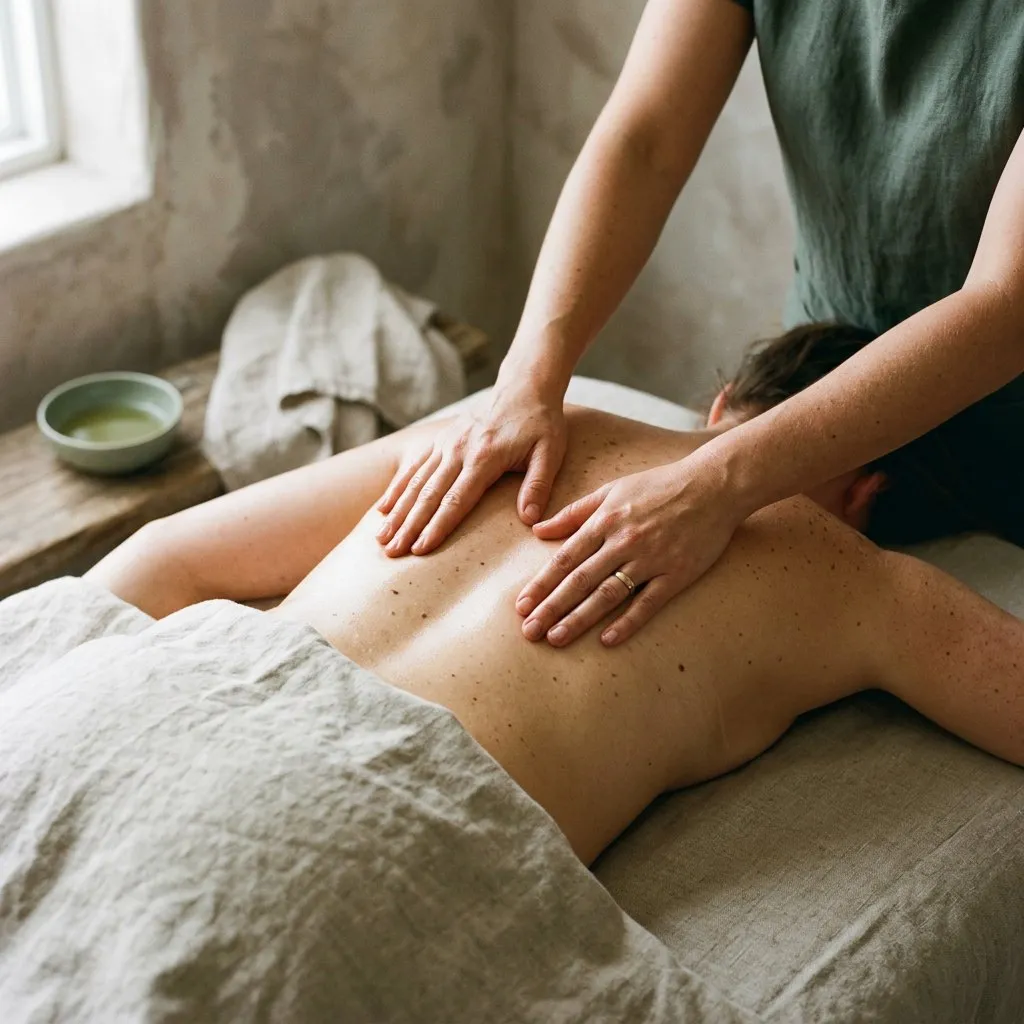
How much is a deep tissue massage in Palo Alto?
W Spa lists deep tissue massage in Palo Alto on Fresha, from $65 for 30 minutes to $180 for 120 minutes. You book Deep Tissue Massage and pick a length.
| Length | Deep tissue | Swedish | What fits at firm pressure |
|---|---|---|---|
| 30 min | $65 | $60 | One area worked properly: neck and shoulders, or the lower back |
| 45 min | $80 | $70 | Two neighboring areas, such as the neck and shoulders plus the upper back |
| 60 min | $90 | $80 | The whole body at a steady pace, with extra time on the worst spot |
| 75 min | $120 | $100 | The whole body plus a second problem area worked through slowly |
| 90 min | $140 | $120 | The whole body, with room to build pressure gradually on several areas |
| 120 min | $180 | $150 | The whole body slowly, with long work on every problem area |
Is 30 minutes of deep tissue enough, or should I book 60?
Thirty minutes is enough for one area. For the whole body at firm pressure, book 60 minutes or more. Deep work goes slowly by design: the therapist warms the tissue, then sinks in and holds while the muscle gives, and that takes a few minutes per area before the useful part starts. Spread 30 minutes across a back, two shoulders, two hips and two legs and each gets a quick pass at best.
Use the short session for a single complaint. Name the area when you arrive, such as the neck and the tops of the shoulders after a week at a laptop, or one side of the lower back, and ask the therapist to stay there. It also works as a top-up between longer sessions.
For an ongoing problem, the research leans toward longer sessions. A 2014 trial of 228 people with chronic neck pain, summarized by NCCIH, found that 60 minute massages given several times a week helped more than fewer or shorter sessions. The trial did not test occasional visits, but it is one reason to choose the hour over the half hour for a problem that keeps coming back.
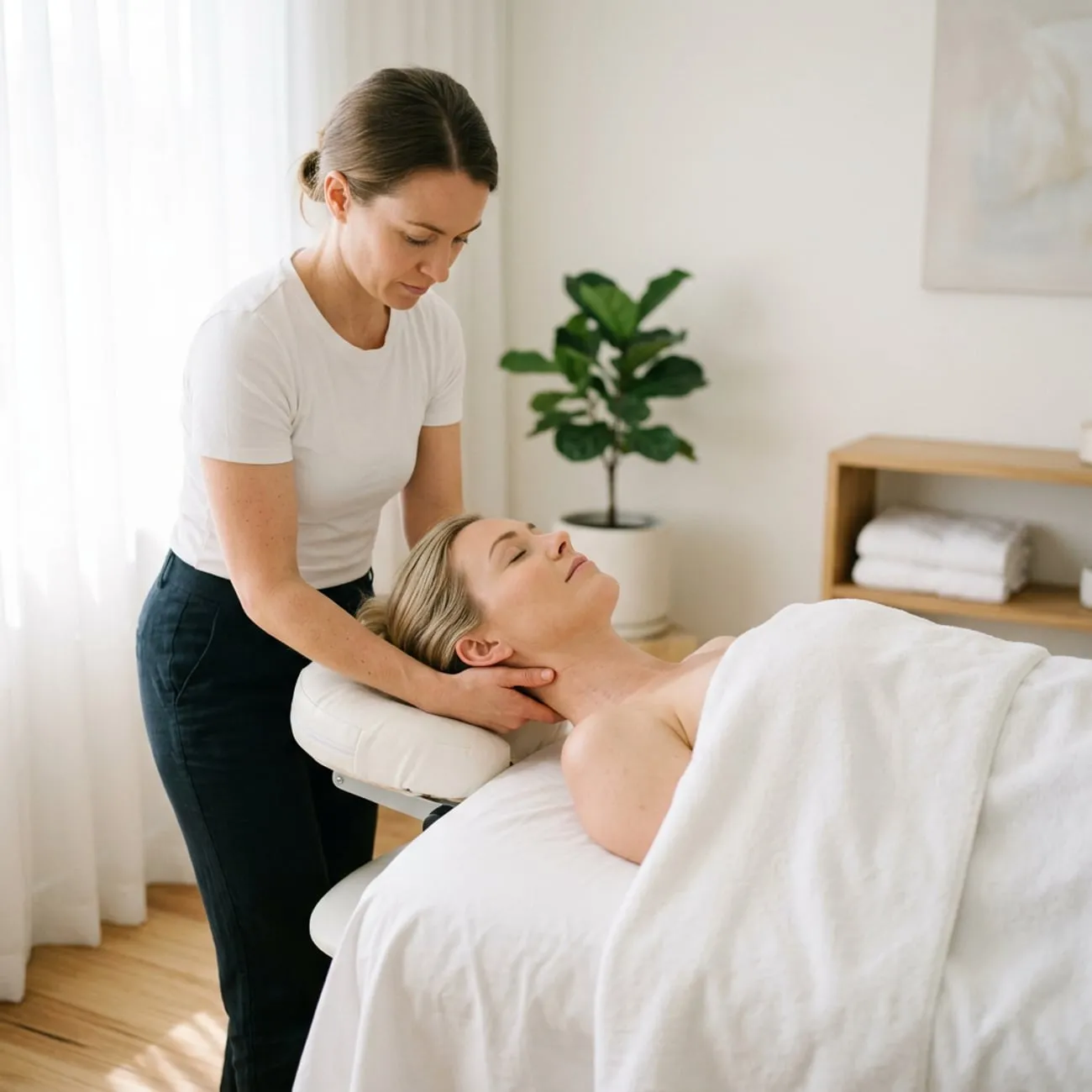
What does deep tissue feel like, and will I be sore afterwards?
Slower and heavier than Swedish, and mild soreness the next day is common. Mayo Clinic describes deep massage as slower, more forceful strokes aimed at the deeper layers of muscle and connective tissue, and notes that some forms of massage can leave you feeling a bit sore the next day. On a tender spot the pressure can feel intense, but you should still be able to breathe slowly through it.
The soreness usually feels like the day after a hard workout: dull, spread out, and easier once you start moving. Sharp pain, bruising you did not expect, or numbness, tingling or weakness in an arm or a leg are a different matter and worth a call to your doctor.
NCCIH describes the risk of harmful effects from massage as low, with rare reports of serious problems such as a blood clot, nerve injury or bone fracture. Some of those cases involved vigorous types of massage, such as deep tissue massage, or people at higher risk of injury, such as older adults.
Who should check with a doctor first?
Mayo Clinic lists situations where massage may not be appropriate: bleeding disorders or blood-thinning medication, burns or healing wounds, deep vein thrombosis, fractures, severe osteoporosis and a severely low platelet count. Firm pressure raises the stakes on each of them, so get medical advice before booking. If back pain comes with fever, unexplained weight loss or changes in bladder or bowel control, see a doctor before any massage.
If you are pregnant, book Prenatal Massage instead. It is adapted for pregnancy and usually worked side-lying with pillows for support.
How do I ask for the pressure I want?
Out loud, early, and in plain words. Therapists set the pressure from what you tell them, and adjusting it partway through is routine. Asking for more or less in the first five minutes gets you a better session than mentioning it on the way out.
- Name the areas before the pressure, for example "right shoulder blade and the left side of the lower back".
- Use a number. "Seven out of ten" tells a therapist more than "deep".
- Say what to leave alone, such as the face, the scalp or the stomach. You do not need to give a reason.
- Breathe out as the therapist leans into a tender spot. If you are holding your breath or gripping the table, ask for less.
- If you want more pressure later on, ask by the halfway point at the latest, while there is still time to use it.
Should I book deep tissue or Swedish?
Book deep tissue for slow, firm work on specific tight spots, and Swedish when the goal is to relax. Swedish uses long, flowing strokes at light to medium pressure and costs less at every length the two share: $5 less at 30 minutes, $10 less at 45 and 60, $20 less at 75 and 90, and $30 less at two hours.
Swedish is often enough. You can ask for firmer pressure in a Swedish session, and if what you want is an hour to switch off, or a massage less likely to leave you sore the next day, the lighter style does it for less. The Swedish massage page covers its six lengths and what each one suits.
Does deep tissue massage help back pain?
It may help for a while, and the evidence for that is modest. Most of the research tests massage in general rather than deep tissue alone. A 2015 Cochrane review included 25 trials covering 3,096 patients with low back pain. People reported less pain shortly after treatment, but the evidence was not of high quality and no long-term effect was established.
In 2016 the Agency for Healthcare Research and Quality (AHRQ) examined 20 studies comparing massage with usual care or other treatments for low back pain. It found evidence that massage helped chronic low back pain and rated the strength of that evidence as low.
The most useful finding for choosing a pressure comes from a 2011 randomized trial of 401 adults with chronic low back pain, published in the Annals of Internal Medicine. It compared structural massage, which targets specific muscles and connective tissue, with relaxation massage and with usual care. At 10 weeks both massage groups were functioning better than the usual-care group, and the structural approach did no better than the relaxing one. For chronic low back pain at least, that suggests you give up little by booking Swedish if firm pressure is not for you.
None of this makes massage a substitute for a diagnosis. The guide to massage and back pain goes through these trials in more detail.
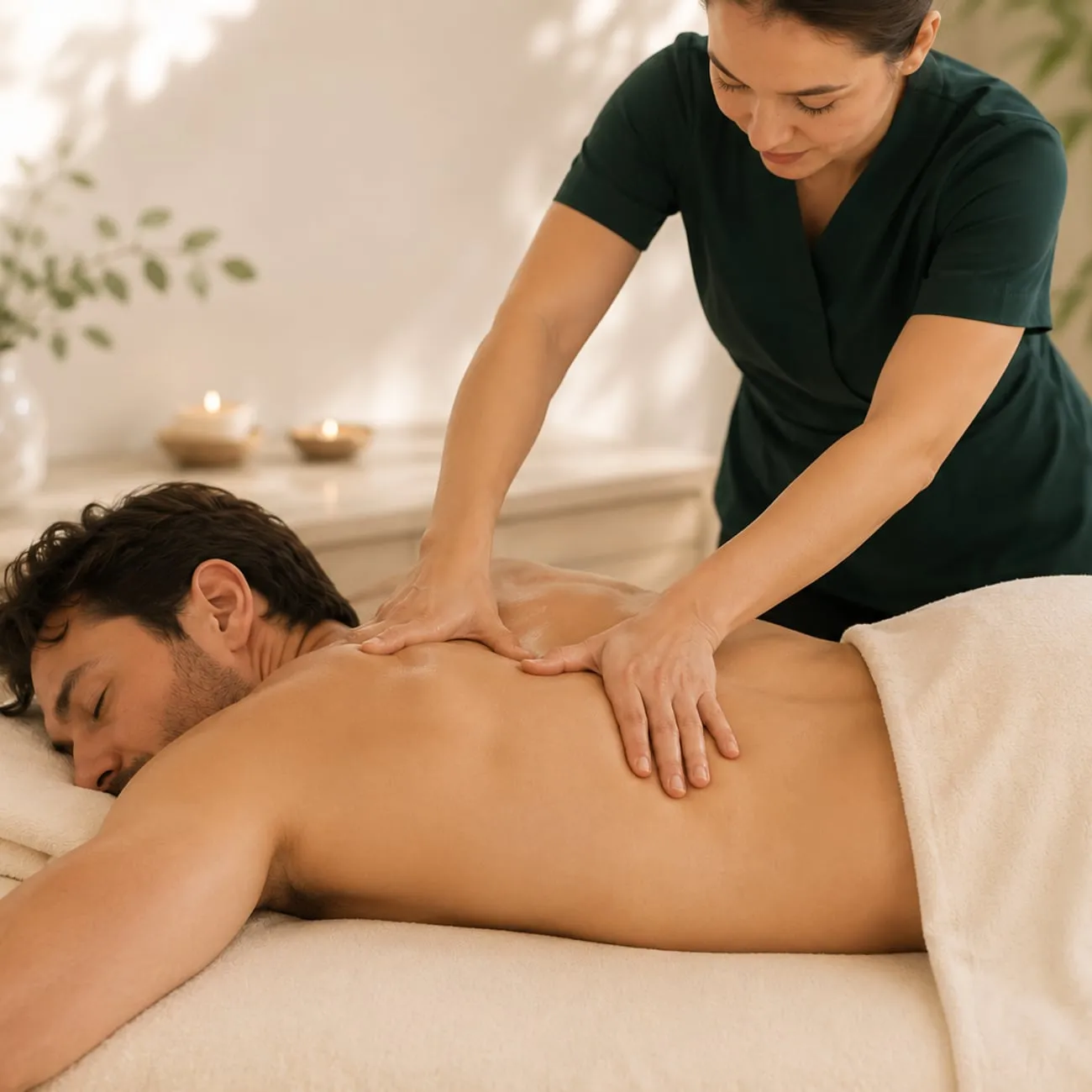
Which add-ons go well with deep tissue?
Hot stone and cupping, at $20 each, are the two that suit firm work. Each is a 10 minute add-on attached to your massage, so a 60 minute deep tissue session with one of them comes to $110. The third add-on, a $30 body scrub, is about the skin rather than the muscle.
Hot stone
Heated basalt stones are placed on and glided over the back and shoulders. Some people like the warmth at the start of a firm session because warm muscle can feel easier to work into. If heat bothers you, leave it off.
Cupping
Suction cups are placed along the back. They can leave round marks that fade over a few days, so book it in a week when visible marks will not matter. The cupping guide covers what the research does and does not show.
Where can I book deep tissue massage in Palo Alto?
At W Spa, 441 Waverley Street in downtown Palo Alto, half a block off University Avenue. Choose Deep Tissue Massage and a length on Fresha, or call (650) 272-6881 if you would rather describe the problem to a person first. The studio is open every day from 9:30 AM to 10 PM.
If you drive, there is free street parking right outside the spa and on the streets around it; posted signs show the time limit. If you plan to come regularly, W Spa offers memberships, so ask at the desk or call for the details.
Questions people ask
How much is deep tissue massage at W Spa?
$65 for 30 minutes, $80 for 45, $90 for 60, $120 for 75, $140 for 90 and $180 for 120, as listed on Fresha.
Is deep tissue massage supposed to hurt?
It should feel strong but bearable. Firm pressure on a tender spot can be intense, yet you should be able to breathe slowly through it. Mayo Clinic advises speaking up right away if any part of a massage is painful, and the therapist can ease off at once.
Can I book deep tissue for just my neck and shoulders?
Yes. The 30 minute session is enough for one area, and the neck and shoulders fit it well. Say so at the start and the therapist can spend the whole time there instead of working through the rest of the body.
What is the difference between deep tissue and Swedish massage?
Swedish uses long, flowing strokes at light to medium pressure to help you relax. Deep tissue uses slower strokes and sustained pressure on the deeper layers of muscle, usually where you hold tension. At W Spa an hour of deep tissue is $90, against $80 for Swedish.
How often should I get a deep tissue massage?
There is no set rule. In the neck-pain trial NCCIH summarizes, 60 minute sessions several times a week helped more than fewer or shorter ones. Few schedules allow that, so book as often as suits your time and budget, and let any soreness settle before the next session.
Can I add hot stone or cupping to deep tissue?
Yes. Each is a 10 minute add-on at $20. Cupping can leave round marks that fade over a few days, so mention it at the start if you would rather not have them.
Do I have to undress completely?
No. Undress to the level you are comfortable with and lie under the sheet. Standard draping keeps you covered except for the area being worked on, and plenty of people keep their underwear on.
Sources
- Cochrane — Massage for low-back pain (2015)
- NCCIH — Massage Therapy for Health: What the Science Says
- NCCIH — Massage Therapy: What You Need To Know
- AHRQ — Noninvasive Treatments for Low Back Pain (2016)
- Cherkin et al. — Two types of massage and usual care for chronic low back pain, Annals of Internal Medicine (2011)
- Mayo Clinic — Massage therapy
Published by W Spa, 441 Waverley Street, Palo Alto. Outside figures on this page come from the sources listed above. Prices and hours are taken from our Fresha booking page.
This page is for general information only and is not medical advice. Talk with your healthcare provider about what is right for you.
Last reviewed . Published .
Book deep tissue
Firm pressure on Waverley Street, from 30 minutes
Choose Deep Tissue Massage on Fresha, pick a length from 30 to 120 minutes, and tell your therapist at the start where to spend the time and how firm to go.
W Spa · 441 Waverley St, Palo Alto, CA 94301 · (650) 272-6881 · Open daily · 9:30 AM – 10 PM
Keep reading
Swedish massage in Palo Alto
The lighter style, from $60 for 30 minutes, and when it is all you need.
Read
Does massage help back pain?
The trials behind this page, read one by one.
Read
Lymphatic facial massage
The 90 minute combo pairs 60 minutes of deep tissue with a 30 minute facial for $188.
Read